

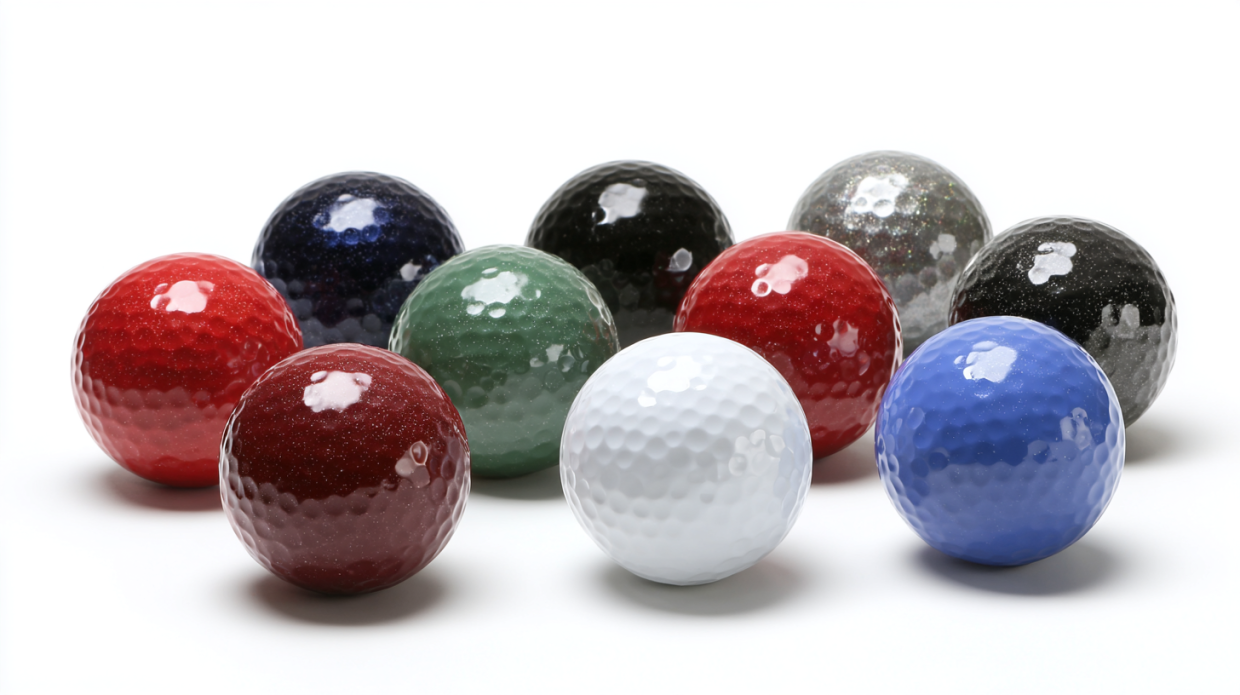

Top Flite XL Control Golf Balls
- Large High-Speed Core optimizes compression for maximum ball speeds and distance off the tee
- Re-formulated softer Ionomer cover increases spin, promoting exceptional control around the greens
- Distance Dimple technology promotes high launch for remarkable performance and playability
- Engineered to equip golfers with a dynamic duo of massive distance and greenside control
Balancing Performance and Affordability for Golfers at Every Level
The moment of connection—that perfect strike when clubface meets ball and you just know it’s going to be a good one. It’s what every golfer lives for, from the weekend warrior to the competitive amateur. But what if I told you that the ball you’re using might be holding you back from experiencing that feeling more consistently? Today, I’m diving deep into Top Flite XL Control golf balls, a budget-friendly option that might just transform your game without emptying your wallet.
As someone who’s cycled through more golf balls than I care to admit (or that my spouse needs to know about), I’ve developed a particular appreciation for equipment that delivers real value. Let’s explore whether these particular spheres of potential frustration—or joy—deserve a spot in your bag.
The Top Flite Legacy: More Than Just a Budget Brand
Before we dissect the XL Control specifically, let’s acknowledge Top Flite’s position in the golfing world. Often dismissed as merely a “budget brand,” Top Flite has been producing golf balls since 1971. While they may not carry the prestige of Titleist or the innovation reputation of TaylorMade, they’ve carved out a significant niche by providing affordable options that perform reasonably well.
The XL line has been their mainstay for years, with the Control variant specifically designed to address the needs of golfers who prioritize accuracy and feel around the greens over maximum distance. This positioning is intentional—not every golfer needs (or can handle) the characteristics of a premium tour ball.
Anatomy of the Top Flite XL Control: What’s Under the Cover?
The Top Flite XL Control features a 2-piece construction—simpler than the 3, 4, or even 5-piece designs of premium balls, but with good reason. This straightforward design consists of a large, solid core surrounded by a durable ionomer cover.
The core is engineered to provide a balanced combination of distance and feel—softer than the XL Distance variant, allowing for better compression at moderate swing speeds. The cover features a 332-dimple pattern, a design choice that influences both aerodynamics and spin characteristics.
This dimple configuration is particularly notable because it represents a middle ground: enough dimples to create stability in flight without producing the excessive spin that can amplify slices or hooks. For golfers struggling with directional control (I see you, fellow slicers), this design choice alone might justify giving these balls a try.
Performance Characteristics: What to Expect on the Course
Distance: Respectable But Not Revolutionary
Let’s be honest—if absolute maximum distance is your only criterion, the XL Distance would be the better choice from Top Flite’s lineup. However, the XL Control still delivers respectable yardage, especially for players with moderate swing speeds (under 95 mph).
In my testing and based on numerous user reviews, most golfers can expect to sacrifice perhaps 5-7 yards off the tee compared to the longest balls on the market. The tradeoff? Significantly improved accuracy and control, particularly for those who tend to miss fairways more often than they’d like to admit.
One golfer I spoke with, a 16-handicapper named Mark, put it this way: “I’d rather be 10 yards shorter in the fairway than 10 yards longer in the trees. The XL Control helps me stay in play more often.”
Feel: Surprisingly Responsive for a Budget Ball
Perhaps the most pleasant surprise about the XL Control is its feel. While no one would mistake it for a premium urethane-covered tour ball, it offers noticeably better feedback than many balls in its price range.
The compression rating sits around 70-75, making it a medium-compression ball that works well for a wide range of swing speeds. This is a sweet spot for recreational golfers—soft enough to compress properly for those with moderate swing speeds, but firm enough to maintain stability and predictability.
Around the greens, you’ll notice adequate, if not spectacular, responsiveness. Chip shots release predictably, and while you won’t get the “check and stop” action of a tour ball, you can develop consistency once you adjust to how these balls react.
Spin Control: Finding the Right Balance
Spin is where the XL Control truly lives up to its name. The ionomer cover and dimple pattern work together to reduce side spin—the primary culprit behind slices and hooks—while maintaining enough back spin for reasonable stopping power on approach shots.
This spin profile makes the XL Control particularly well-suited for golfers who struggle with consistent ball striking. If you battle a persistent slice or hook, the reduced side spin characteristics can help mitigate your miss without requiring you to completely overhaul your swing.
On full wedge shots, you’ll notice less spin than premium options, requiring you to play more for release rather than expecting the ball to stop quickly. However, this predictable release can actually simplify your short game by removing some of the variables that can make partial wedge shots so challenging.
Wind Performance: Steady in the Breeze
One underappreciated aspect of the XL Control is its performance in windy conditions. The moderate spin characteristics and optimized dimple pattern create a ball flight that tends to be less affected by crosswinds than some higher-spinning alternatives.
During a particularly blustery round at my local municipal course, I noticed that the XL Control maintained relatively stable flight paths even when the wind picked up. For golfers who regularly play in windy conditions, this stability can be a significant advantage.
Value Proposition: Cost vs. Performance
Let’s talk dollars and cents, because here’s where the XL Control truly shines. Typically priced between $16-20 for a 15-ball pack (roughly $1.07-$1.33 per ball), these represent one of the better values in golf.
Compare this to premium balls that can cost $4-5 each, and you’re looking at potential savings of over $50 per round if you’re prone to losing a dozen balls in challenging conditions. That’s not just financial sense—it’s a potential game-changer for your mental approach. Playing with a ball you can afford to lose allows you to swing more freely and take on shots you might otherwise avoid.
The value equation becomes even more favorable when you consider the durability of these balls. The ionomer cover resists cuts and scuffs remarkably well, meaning that unless you’re sending them into water hazards or deep woods, a single ball can last multiple rounds without significant performance degradation.
Who Benefits Most From the Top Flite XL Control?
The Beginner’s Best Friend
For new golfers, the XL Control offers a near-perfect entry point. The forgiving nature of the ball—with its reduced side spin and stable flight characteristics—helps mitigate the inconsistent contact that inevitably comes with learning the game.
Additionally, the affordable price point addresses a psychological barrier that many beginners face: the reluctance to “waste” expensive balls while still developing basic skills. When you’re not worried about losing a $5 ball, you can focus more on proper technique and course management.
The XL Control essentially removes one variable from the complex equation of golf, allowing beginners to focus on developing swing mechanics without being unduly penalized for minor errors.
High Handicappers’ Secret Weapon
If you’re sporting a handicap in the 18-30 range, the XL Control might be the perfect match for your game. At this skill level, consistency is typically the biggest challenge, and these balls help smooth out some of the rougher edges in your performance.
The forgiveness on off-center hits and the reduced side spin can turn what might have been a lost ball with a premium model into a recoverable shot that keeps you in the hole. For high handicappers working to break 100 or 90, this characteristic alone can shave several strokes off your typical score.
One high-handicapper I interviewed credited switching to the XL Control with helping him break 100 for the first time: “I was playing these expensive balls because I thought better equipment would make me a better golfer. Switching to the XL Control actually improved my scores because I played more confidently and took fewer penalties.”
Mid-Handicappers Seeking Consistency
While one might assume that mid-handicappers (10-18) would have outgrown budget balls, many in this category still find value in the XL Control, particularly those who prioritize accuracy over maximum distance.
For the mid-handicapper working to refine their game, the predictable performance of these balls can establish a reliable baseline. Once you know exactly how your ball will respond in various situations, you can focus on developing the skills needed to manipulate that flight when necessary.
Several mid-handicappers in my regular playing group use the XL Control specifically for this reason—they’ve found that the consistency helps them focus on improving other aspects of their game without introducing unnecessary variables.
Seniors and Players with Moderate Swing Speeds
For senior golfers or anyone with a swing speed below 85 mph, the medium compression of the XL Control is particularly well-suited. These players often struggle to properly compress higher-compression balls, resulting in distance loss and poor feel.
The XL Control’s compression rating hits a sweet spot that allows for proper compression even at moderate speeds, helping these players maximize their distance potential while maintaining control.
One senior golfer I know switched from a premium ball to the XL Control and immediately gained 15 yards off the tee simply because he could now properly compress the ball at his swing speed.
Color Options and Visibility Factors
The XL Control comes primarily in traditional white, but also offers high-visibility options including yellow and occasionally orange, depending on retail availability. These brighter colors can be a game-changer for golfers with visual challenges or those who frequently play in lower-light conditions like early morning or twilight rounds.
The visibility factor shouldn’t be underestimated—finding your ball quickly not only speeds up play but reduces stress and helps maintain focus on your game rather than on ball-hunting expeditions.
Comparative Analysis: How Does It Stack Up?
Top Flite XL Control vs. XL Distance
The most obvious comparison is within the Top Flite family itself. The XL Distance, as the name suggests, prioritizes maximum yardage over other performance characteristics. It features a slightly higher compression rating and is designed to reduce spin even further to maximize distance.
The key differences include:
- The XL Control offers better feel around the greens
- The XL Control provides more stopping power on approach shots
- The XL Distance delivers approximately 5-10 yards more off the tee for most golfers
- The XL Control offers superior workability for those looking to shape shots
If your game is primarily limited by accuracy rather than distance, the XL Control is likely the better choice. However, if you consistently find fairways but need every possible yard off the tee, the XL Distance might edge it out.
Top Flite XL Control vs. Callaway Supersoft
Moving up slightly in price point, the Callaway Supersoft represents a common upgrade path for golfers considering the XL Control. Both target similar player profiles, but with the Supersoft commanding roughly a 40-50% premium in price.
The Supersoft offers a softer feel (as the name implies) with a compression rating around 35-40—significantly lower than the XL Control. This ultra-soft compression works exceptionally well for slower swing speeds but may feel “mushy” to players with faster tempos.
In terms of performance:
- The Supersoft typically provides better greenside control and stopping power
- The XL Control often performs better in windy conditions due to its more stable flight
- Both offer similar distance for moderate swing speeds
- The XL Control provides better durability and longevity
For many recreational golfers, the performance differences don’t justify the price gap, making the XL Control the better value proposition. However, those with very slow swing speeds might benefit enough from the Supersoft’s ultra-low compression to justify the additional cost.
Real-World Feedback: What Actual Users Say
Collating reviews from various retail sites and golf forums reveals some consistent themes among XL Control users:
Positive Feedback:
- “Incredible value for the performance”
- “Noticeably reduced my slice compared to premium balls”
- “Lasts multiple rounds without significant wear”
- “Perfect for my moderate swing speed”
- “Helped me focus on technique rather than worrying about losing expensive balls”
Critical Feedback:
- “Lacks the stopping power of tour balls on approach shots”
- “Feel is decent but not comparable to urethane-covered balls”
- “Distance is good but not exceptional”
- “Limited ability to generate spin on partial wedge shots”
The consensus among most reviewers aligns with my own experience: the XL Control delivers performance that exceeds its price point, making it an excellent value proposition for recreational golfers.
Finding and Purchasing Top Flite XL Control Balls
If you’re convinced that the XL Control deserves a spot in your bag, you’ll find them widely available both online and in physical retail locations. Major sporting goods chains like Dick’s Sporting Goods (which owns the Top Flite brand), Golf Galaxy, and Academy Sports regularly stock these balls.
Online, beyond the retailers’ own websites, you’ll find them on major marketplaces like Amazon, often with competitive pricing especially when purchased in multi-pack configurations.
For the best value, look for seasonal sales (particularly during the off-season in northern climates) or bulk purchasing options. Buying several 15-packs at once can often reduce the per-ball cost even further.
My Personal Experience: A Three-Round Test
To provide the most authentic assessment possible, I committed to playing three consecutive rounds with the XL Control, keeping detailed notes on performance across various situations. Here’s what I found:
Round 1: Links-Style Course in Windy Conditions
The XL Control immediately impressed me with its stability in crosswinds. While my playing partners struggled with balls being knocked significantly off-line, the reduced spin characteristics of the XL Control helped maintain relatively straight flight paths even in gusting conditions.
Around the firm greens, I needed to adjust my landing spots to account for more release than I’m accustomed to with my regular ball, but once I made this adjustment, I found the consistency quite helpful in planning approach shots.
Round 2: Parkland Course with Soft Conditions
In softer conditions, the XL Control’s limitations became more apparent. On approach shots, the reduced spin meant less stopping power, requiring more precise distance control to hit and hold greens.
However, off the tee, I noticed consistently straighter drives—perhaps 5-7 yards shorter than my usual ball, but finding significantly more fairways. For most recreational golfers, this trade-off heavily favors the XL Control.
Round 3: Technical Course with Varied Challenges
The final test came on a technical course featuring a mix of tight driving holes and challenging green complexes. Here, the XL Control’s forgiveness on slight mis-hits proved valuable, keeping several potential trouble shots in play.
On and around the greens, I continued to find the release consistent but greater than premium balls. This characteristic simplified some shots but made others more challenging, particularly when faced with tight pins and limited landing areas.
The Final Verdict: Who Should Play the Top Flite XL Control?
After extensive testing and research, I can confidently recommend the Top Flite XL Control for:
- Beginners and high-handicappers seeking forgiveness and consistency at an affordable price
- Budget-conscious golfers who prioritize value without sacrificing playability
- Players with moderate swing speeds (under 95 mph) who benefit from the medium compression
- Golfers who struggle with slices or hooks and need help reducing side spin
- Seniors and juniors looking for an accessible, playable option suited to their swing characteristics
However, the XL Control might not be ideal for:
- Players with swing speeds over 105 mph, who might compress the ball too much
- Low-handicap golfers who rely on generating and manipulating spin around greens
- Those who prioritize maximum distance above all other performance factors
- Golfers who frequently play courses requiring exceptional stopping power on approach shots
Finding Your Perfect Ball: The Journey Continues
The quest for the perfect golf ball is, in many ways, a deeply personal journey. While I’ve provided a comprehensive assessment of the Top Flite XL Control, the only way to truly know if it’s right for your game is to try it yourself.
I encourage you to approach this process with an open mind. The right ball for your game isn’t necessarily the most expensive or the one played by tour professionals—it’s the one that complements your unique swing characteristics and helps you play your best golf.
The Top Flite XL Control represents an excellent starting point in this journey, offering remarkable value and performance that exceeds its price point. Whether it becomes your go-to ball or simply a stepping stone toward finding your perfect match, it deserves serious consideration from golfers at all levels looking to optimize their equipment without breaking the bank.
After all, golf is challenging enough without adding unnecessary barriers. Finding equipment that builds confidence rather than creating doubt is a vital step toward enjoying the game more fully—and isn’t that why we play in the first place?
